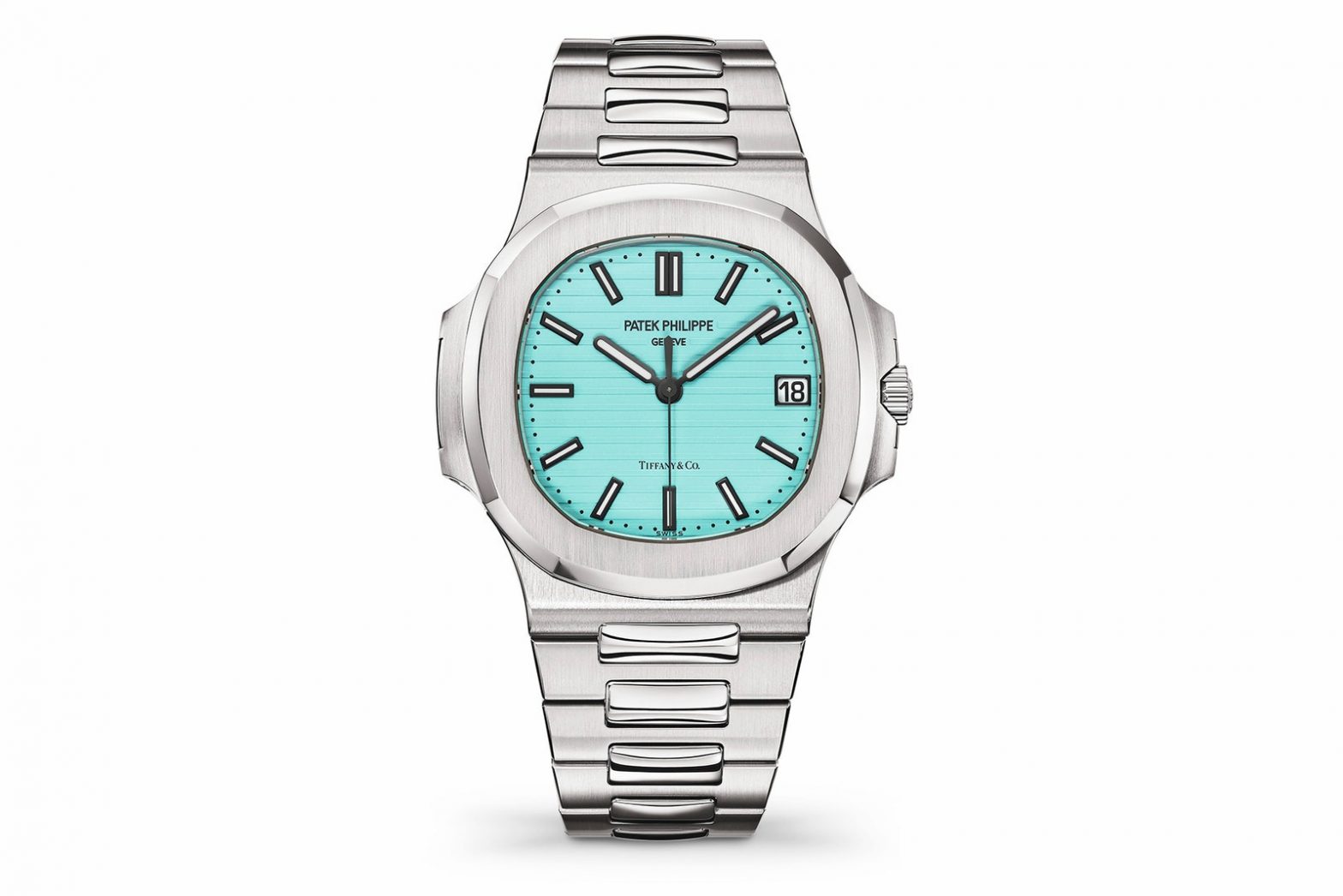
The Tiffany Blue Patek Philippe Nautilus 5711 is a small-production watch with an unusually large cultural footprint. Patek Philippe announced reference 5711/1A-018 in December 2021 to mark 170 years of its relationship with Tiffany & Co. Only 170 examples were made, each with the familiar horizontally embossed dial in Tiffany Blue and a second signature above six o’clock. That combination of a retiring steel Nautilus reference, a famous retailer and a tightly limited production run made the watch an immediate auction story. This article separates the documented facts from the price speculation and explains which details give the edition its identity.
Why this 5711 became exceptional
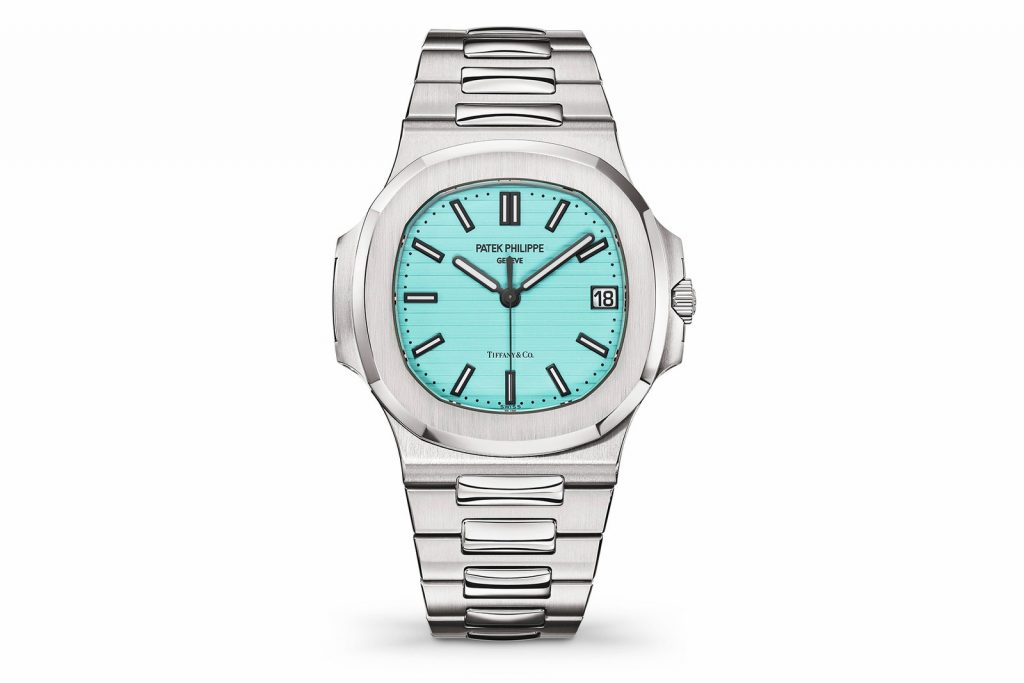
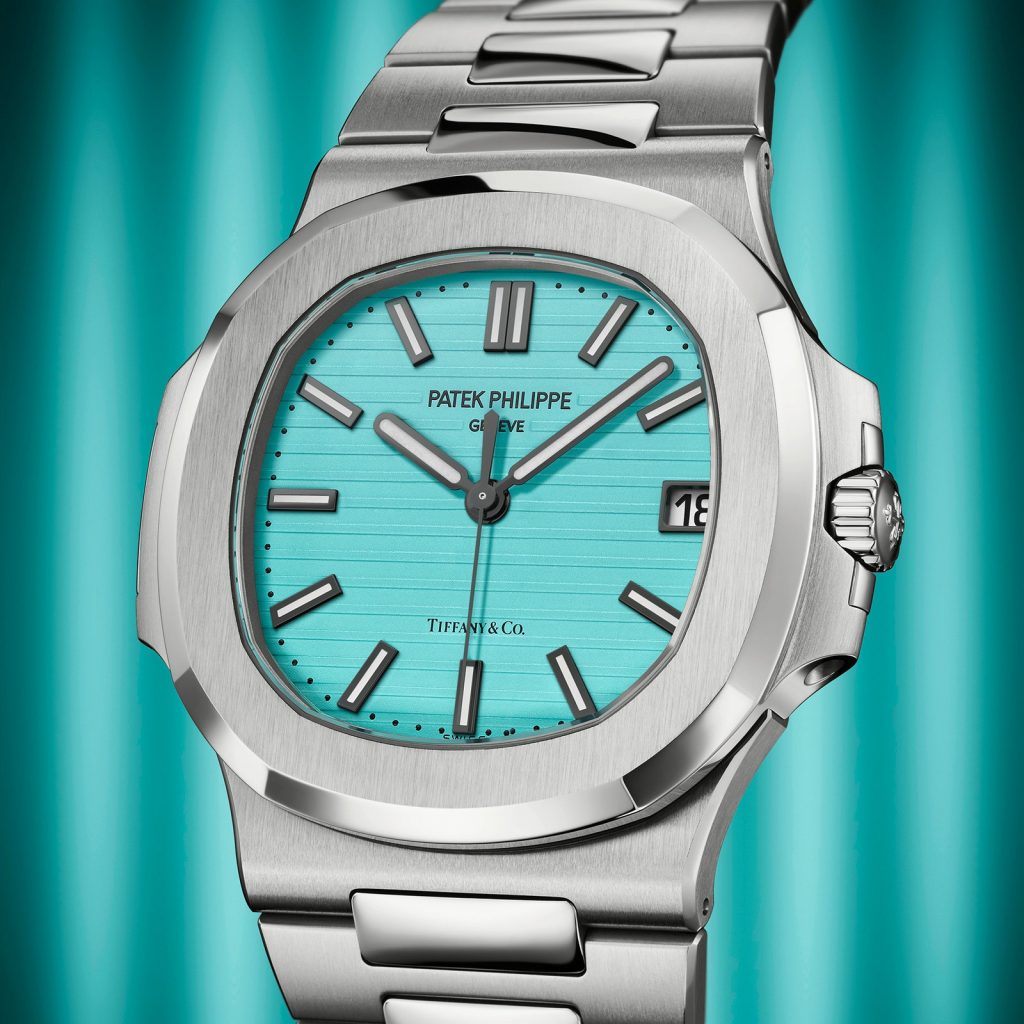
The context matters as much as the colour. Patek Philippe had already confirmed the end of the steel 5711, and the olive-green 5711/1A-014 had become the final regular-production variation. The Tiffany edition arrived after that announcement, turning an already scarce watch into a formal anniversary piece. The dial carries Patek Philippe at twelve and Tiffany & Co. at six, while the case back bears an inscription referring to the partnership. The edition was distributed through selected Tiffany boutiques in the United States, not through the wider Patek Philippe network. Its importance therefore comes from a precise story rather than from blue paint alone.
The auction result and what it means
The first publicly offered example was sold by Phillips in New York in December 2021, with the proceeds designated for charity. The result reached US$6.5 million before the buyer’s premium. That figure should not be treated as a normal market benchmark: it combined the first watch offered, intense publicity and a charitable sale. Later private and auction prices belong to different circumstances. For readers researching the reference, production number, documented provenance and original Tiffany paperwork matter more than a headline figure copied without context.
Recognising the genuine reference
The 5711/1A-018 retains the broad, rounded octagonal bezel, lateral case ears and integrated steel bracelet associated with the time-only Nautilus. Its dial uses blackened white-gold baton markers and hands with luminous material, which provide strong contrast against the pale blue surface. The date remains at three o’clock. Finishing is a major part of the design: broad brushed planes meet narrow polished bevels, and the bracelet should flow directly from the case before tapering towards the clasp. These proportions are more dependable identifiers than colour, which can shift dramatically under different lighting and camera settings.
How to compare an interpretation
A convincing interpretation needs the correct case shape before it needs a convincing shade of blue. Check the corner radii of the bezel, the depth of the side ears, the thickness of the case and the alignment of the horizontal dial grooves. The Tiffany signature should sit cleanly above six without crowding the date or minute track. Applied markers need even spacing and consistent blackened surrounds. On the bracelet, the alternating finishes should be crisp rather than blurred. Decorative movement work can be examined through the back, but exterior geometry and typography are the faster way to identify a mismatch.
A watch defined by context
The Tiffany 5711 cannot be understood as simply another coloured Nautilus. It closes the steel 5711 chapter while recording a retail partnership that began in 1851. That is why a visual copy can reproduce the palette but not the provenance. Anyone comparing versions should keep those two questions separate: how closely does the object reproduce the reference, and what documentary history belongs to the original? The first is a matter of construction and detail; the second cannot be created by a dial signature.
For more reference-focused coverage, browse our Patek Philippe Nautilus replica watches archive. The BuyWatches UK homepage provides access to the rest of the brand and collection categories.