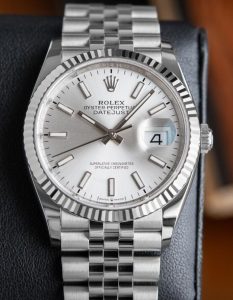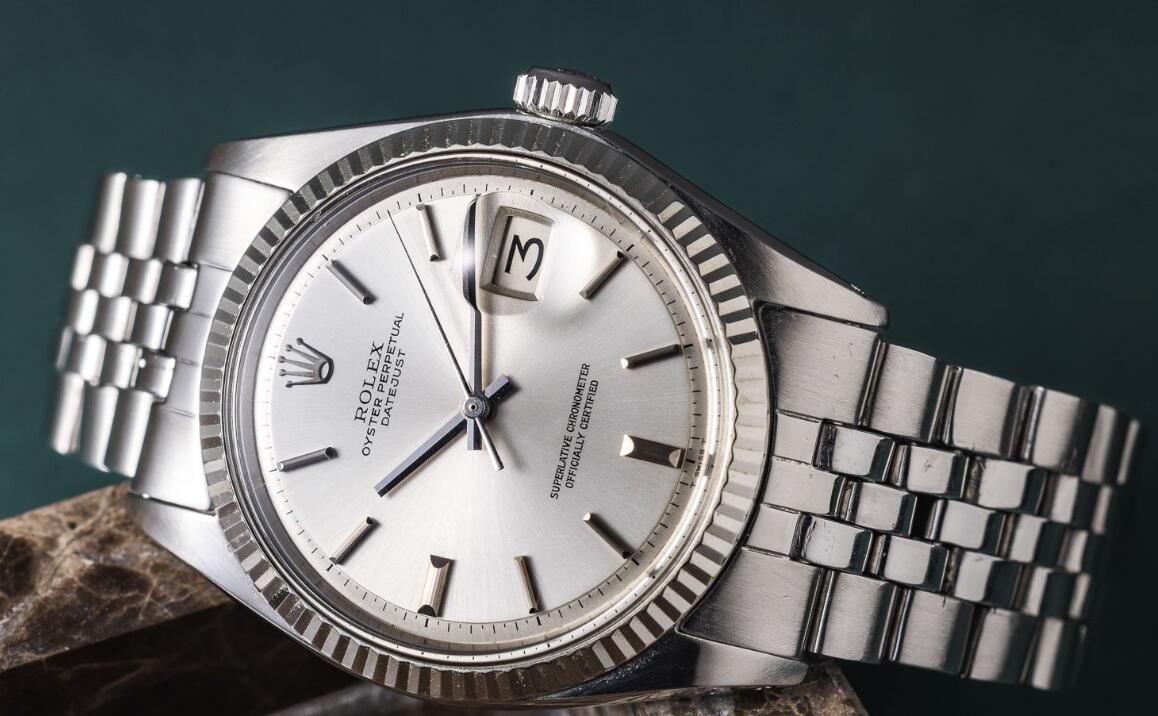
Rolex introduced the Datejust in 1945 to mark the company’s fortieth anniversary. Eight decades later, the collection still uses the same basic idea: a waterproof self-winding wristwatch with a date window that changes around midnight. The design has evolved through new sizes, movements, crystals, bracelets and dial treatments, yet it remains readable as a Datejust. Its longevity is useful for comparison because it shows why a reference number matters more than a generic list of familiar features.
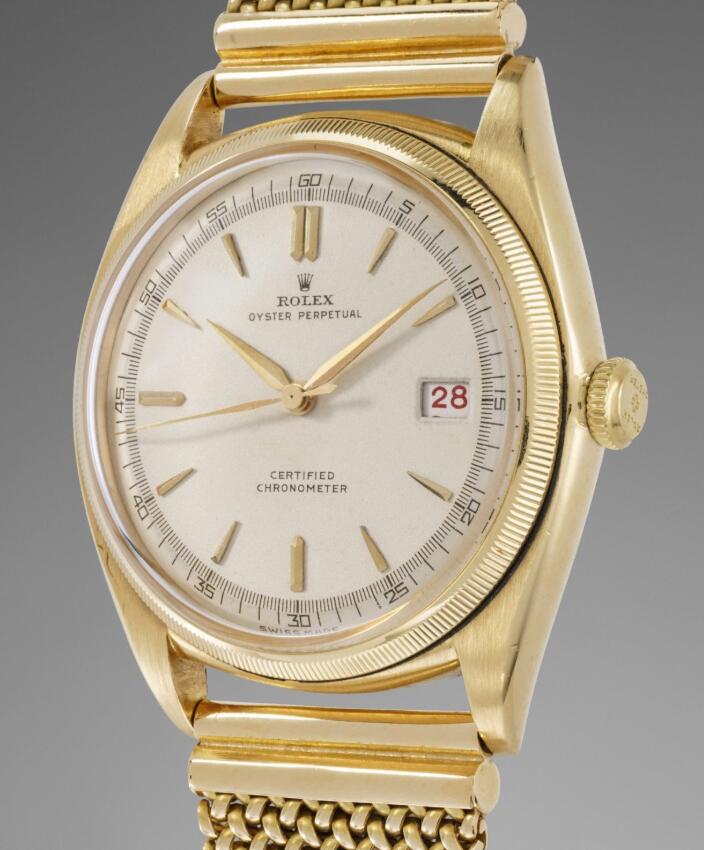
The 1945 foundation
Early Datejust references combined the Oyster case with an automatic movement and a date aperture at three. The original launch also introduced the five-link Jubilee bracelet, whose smaller links gave the watch a dressier appearance than the broader Oyster bracelet. The name referred to the date changing close to midnight rather than drifting slowly through the night. These features did not all reach their modern form immediately, so vintage watches should be judged against their period rather than against a current Datejust 41.
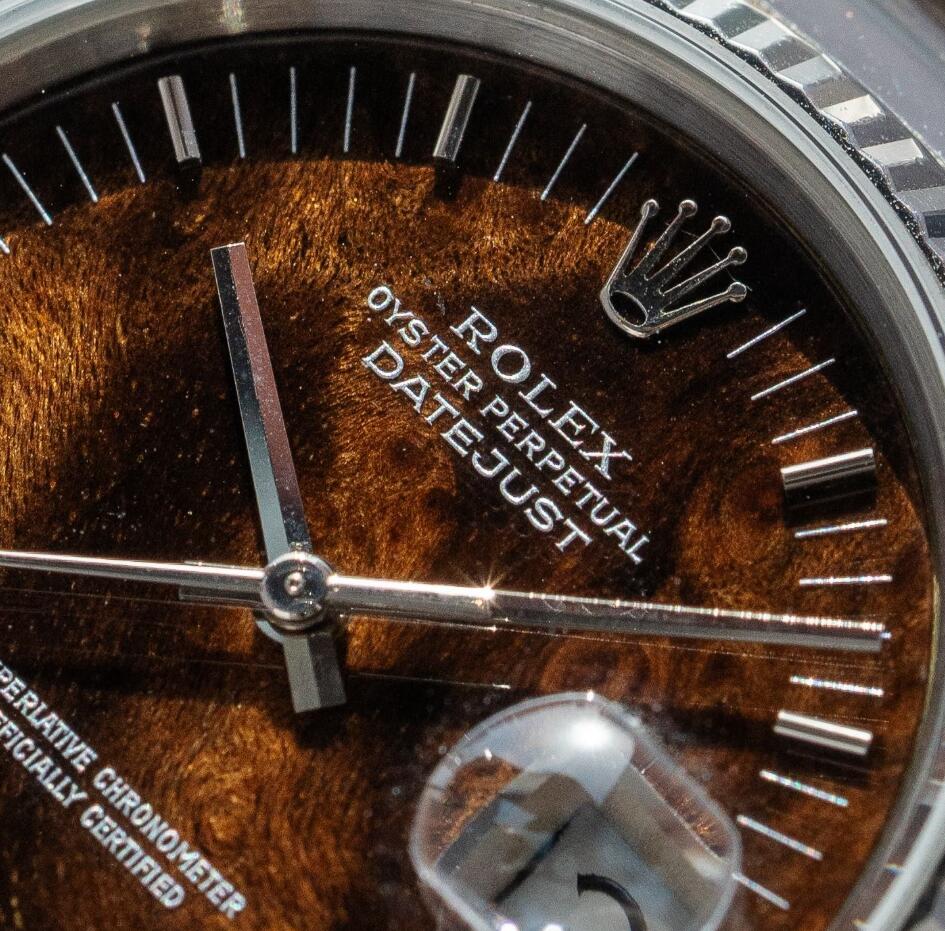
The Cyclops arrived later
The magnifying Cyclops lens appeared during the 1950s and became one of the collection’s most visible signatures. It should sit directly over the date window and provide clear enlargement without distorting the surrounding dial. On older acrylic crystals, the lens and surface can age differently from a modern sapphire assembly. A misplaced lens or weak magnification is conspicuous, but the correct treatment depends on the reference and service history.
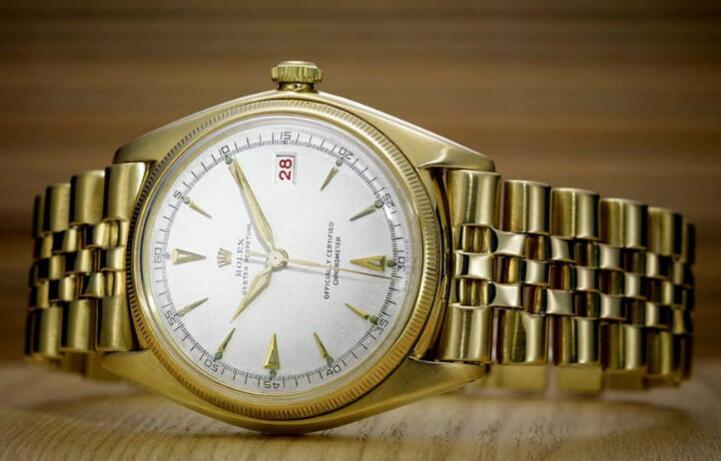
Many legitimate configurations
Datejust references can combine smooth, fluted or gem-set bezels with Oyster or Jubilee bracelets. Dials range from simple batons to Roman numerals, diamonds and textured surfaces. Steel, yellow Rolesor, Everose Rolesor and precious-metal cases further broaden the range. That variety does not mean any combination is correct. Use the reference and dial code where available, then check that the bezel metal, crown, bracelet centre links and marker style form one documented configuration.
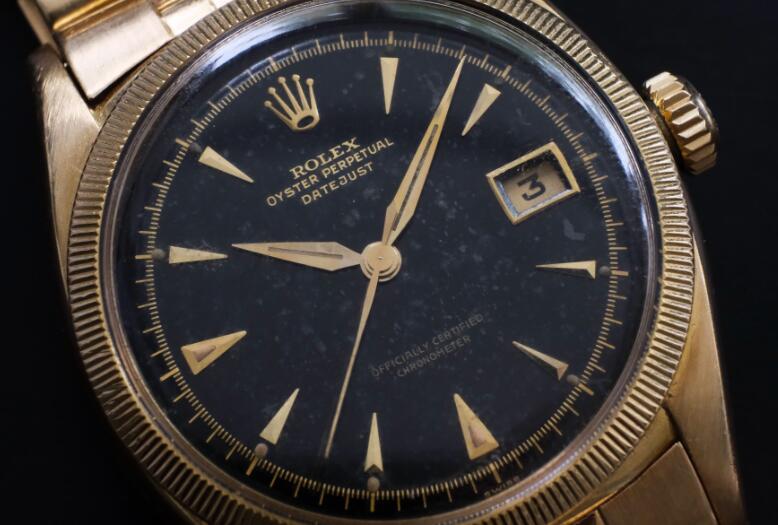
Datejust 36 and Datejust 41
Current 36 mm and 41 mm models share the family language but do not scale every element identically. Bezel width, marker length, dial space and bracelet proportions change the visual balance. The larger watch is not simply an enlarged 36. Side views reveal differences in case shape and lug transition that straight-on images can hide. Wrist size matters, but so does the desired amount of dial presence and bracelet drape.
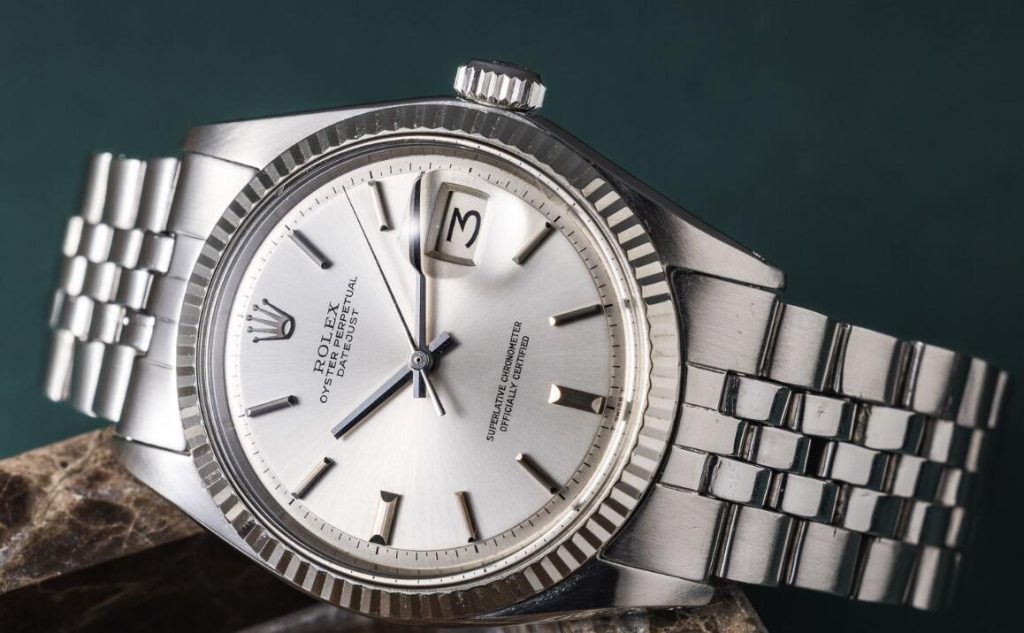
Details that survive changing fashion
The strongest Datejust interpretations get the relationship between parts right: crown size against the case, bezel width around the dial, Cyclops position, date font and end-link fit. Finishing should separate brushed outer surfaces from polished details cleanly. Operate the date through several changes and check that it centres each time. Water resistance requires a pressure test, particularly on older or previously opened cases. Eighty years of continuity makes small inconsistencies easier, not harder, to notice.
Reference-focused coverage is grouped in our Rolex Datejust replica watches category. Visit the BuyWatches UK homepage for other Rolex families and brands.